Inflation Cools to 2.8% — Here's What It Means for GTA Home Buyers
StatCan's June report shows inflation easing on lower gas prices. Here's why that matters if you're buying, selling, or investing in Toronto and the GTA.
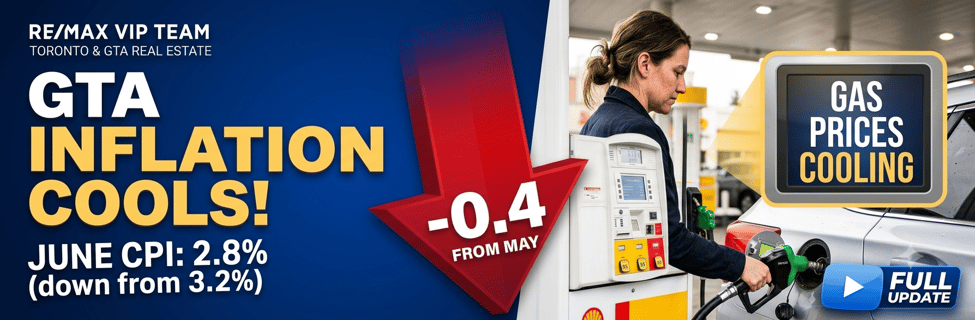
Statistics Canada's latest inflation report is out, and it's good news for anyone watching the housing market from the sidelines: the Consumer Price Index rose 2.8% year-over-year in June, down from 3.2% in May. The main driver? Falling gas prices, which reversed much of last month's energy-driven spike.
It's easy to scroll past a StatCan headline like this. But for GTA buyers, sellers, and investors, this number is one of the most important economic signals to watch — because it's the one the Bank of Canada leans on most heavily when setting interest rates. And interest rates are what shape your mortgage payment, your pre-approval amount, and how much home you can actually afford.
What Actually Happened
May's inflation print jumped to 3.2%, largely because of a surge in gasoline prices tied to Middle East conflict disrupting energy exports. That pushed overall energy costs up sharply across Canada. In June, with prospects of easing tensions, gas prices came back down — and so did the headline inflation number, landing at 2.8%.
Why It Matters for the Bank of Canada
The Bank of Canada's core mandate is keeping inflation in check, typically within a 1–3% target range. When inflation runs hot, the Bank tends to hold or raise rates to cool spending. When inflation eases like it did in June, it strengthens the case for the Bank to hold rates steady — or even move toward a cut.
What This Means for the GTA Market
None of this happens overnight. But inflation data like this is exactly the kind of early signal that helps you plan a move ahead of the crowd, instead of reacting to it after rates have already shifted.
Thinking About Buying or Selling in the GTA?
Let's go over what today's numbers mean for your specific price range, neighbourhood, and timeline.
Talk to RE/MAX VIP TEAM© 2026 Andrei Baiborodin, RE/MAX VIP TEAM, RE/MAX Premier Inc., Brokerage. Not intended to solicit properties currently under contract.